Independent podcast Troubled Waters sparks reopening of coronial investigation
Guy Scott-Wilson, Content Director for Acast ANZ, on the growing impact of independent podcasting in Australia
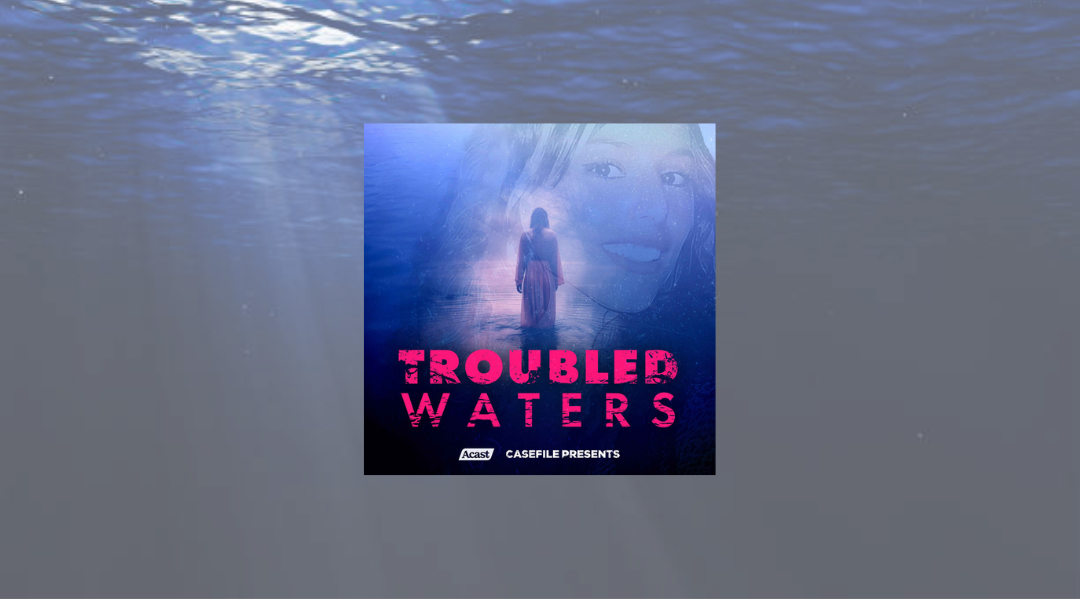
One of the rarest steps in the Australian justice system – the reopening of a coronial investigation – has been triggered not by a major newsroom or broadcaster, but by an independent true crime podcast. The development underscores the rising influence of grassroots investigative media in Australia.
In October 2011, the body of 24-year-old Louisa Ioannidis was discovered in Darebin Creek, Melbourne. Her death was initially treated as non-suspicious and barely received a two-line report in a local newspaper. When Coroner Paresa Spanos ruled in 2014 that the cause of death was “consistent with drowning,” Louisa’s older half-brother, Anastasios (Tass), was left unsatisfied and determined to find answers.
That search led to Troubled Waters, a 10-part investigative series released by Acast in 2024. The podcast documented a renewed examination of the case by private investigator Julia Robson and producer Clare McGrath, who worked closely with Tass and the Ioannidis family. Their investigation not only uncovered new evidence but presented a compelling narrative that resonated with an international audience: the series has now surpassed 2.45 million downloads and prompted widespread public discussion. An episode of Australian Story, aired in September last year, drew heavily on the podcast’s findings.
Last week’s announcement that the coronial investigation will be formally reopened marks one of the most significant moments yet for independent podcasting in Australia. Coroners rarely revisit their own findings, and what’s more, the entire reopening process was triggered by an independent podcast, not a legacy media organisation.
It’s further proof of the power and credibility that independent creators can bring to serious investigative work, offering families support that might otherwise never be available.
The rise of true crime podcasting
While the true crime category is sometimes dismissed as oversaturated, the reality is that – in an era of underfunded newsrooms and declining trust in institutions – podcasting has become an incredibly powerful outlet for the endangered art of investigative journalism. The episodic, long-form audio format allows the story to play out in real time and affords the investigation space to unfold. Journalists flourish without the constraints of mainstream newsrooms, and Australian audiences in particular are here for it.
The global ‘true crime boom’ began with the now-iconic podcast Serial in 2014, which received worldwide attention for uncovering new evidence about the 1999 murder of Hae Min Lee and contributed to the subsequent release of Adnan Sayed. But it was the launch of Casefile True Crime in 2016 that first brought an Australian voice to true crime audiences, blazing a trail for Australia’s position today as a powerhouse of true crime podcasting. Approaching its tenth anniversary, Casefile has generated more than 800 million downloads globally, a testament to the enduring interest in true crime.
Research shows that true crime audiences are unusually engaged, detail-oriented, and motivated to share information. With a strong sense of community among listeners, they often operate like a distributed investigative network.
In January this year, Queensland Police confirmed that a listener tip-off from the Australian True Crime podcast led to the arrest of fugitive Keith Lees. Lees had been wanted for the murder of his former partner Meaghan Louise Rose, who was found dead on the Sunshine Coast in 1997. The listener came forward after podcast host Meshel Laurie dedicated two episodes to the story, featuring interviews with members of both Rose and Lees’ families. Similarly, The Teacher’s Pet built such an enormous audience that the series was removed from platforms during the trial of Chris Dawson, who was ultimately convicted of his wife’s murder in 2022.
What this means for the media landscape
Data released in Acast’s Podcast Pulse 2025 reveals that podcast creators’ power is rooted in resonance – a deep, ‘lean-in’ connection with audiences who actively choose the content, not just consume what’s served to them. Compared to other channels, podcasts rank #1 for being perceived as genuine and trustworthy, with podcast hosts ranking equally alongside journalists in credibility (33% each).
Independent media can meaningfully fill the gaps left by traditional newsrooms, and true crime podcasts are at the forefront of that. For some cases and families, these shows are becoming part of the justice process: surfacing overlooked details, encouraging new witnesses to come forward, and reviving cold cases.
Yet despite their growing impact and enormous popularity with audiences, true crime podcasts remain underfunded. The IAB’s 2024 Crime Pays report found only 22% of Australian media agencies had invested in the genre, compared with 63% in ‘entertainment.’ This is despite neuroscience research showing that true crime delivers exceptional engagement and memorability for advertisers.
As investment in podcasting continues to rise, the potential impact of well-funded independent investigative creators – and the cases they could help progress – is immense. Troubled Waters demonstrates what’s already possible. The question now is how much further Australia’s independent media ecosystem can go when properly supported.
