I Came to Spain Expecting Differences in Podcasting. Here's What I Found.
by Laura Hagen - SVP, Regional Managing Director, Americas & Global Head of Agency Relations
When this year’s Acast Podcast Pulse study, covering 13 countries, came out, one finding from Spain caught me by surprise: 93% of podcast consumers surveyed engage with both audio and video. That was higher than the US (90%) and the global average (88%).
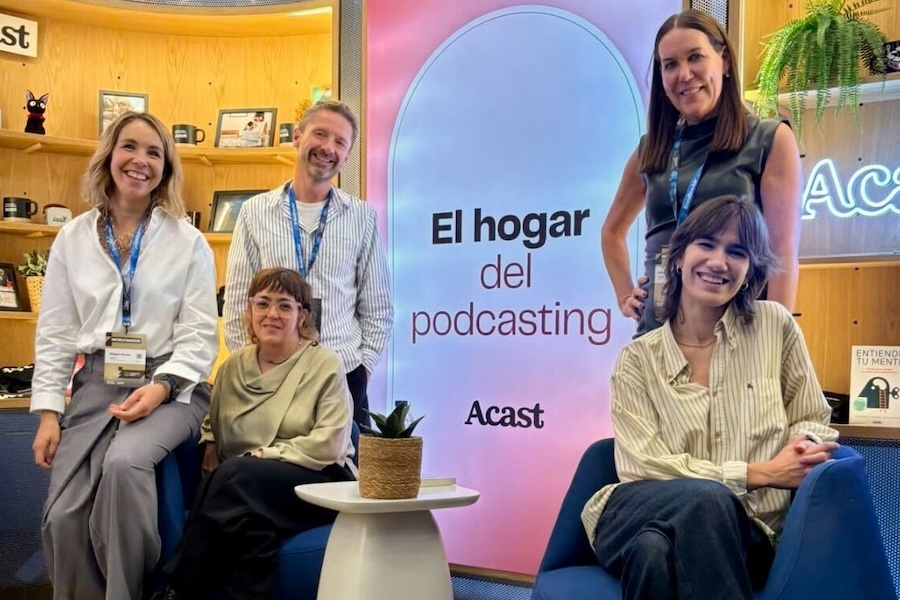
From my US vantage point, I had assumed Spain might be earlier in the transition to video and less consumed by the video debates and the friction of audiences moving between formats. But when I travelled to Madrid for Podcast Days, Spain’s largest professional podcasting event, that assumption was quickly challenged.
The finding became one of the most talked-about takeaways from our presentation, echoing through conversations throughout the day. It wasn’t a theoretical trend: it reflected a daily reality Spanish creators are navigating as audiences shift between listening, watching and discovering podcasts through social clips. Even thousands of miles from home, the questions I encountered were remarkably familiar to those we hear in the US..
What people kept asking
Podcast Days brought together creators, production companies, platforms, media groups, tech companies, and a smaller representation of agencies and advertisers.
People wanted data. They wanted to understand how Spain compares with the US and the rest of the world, and they came with plenty of tactical questions about video strategy across Apple, Spotify, and YouTube. Yet above all, they wanted reassurance to know that audio still matters, and that pure listening continues to grow even as video commands attention.
At the Acast booth, our team heard one question more than any other: How do I grow my audience? Creators wanted to understand which promotional approaches work, how to reach new listeners, and what they could learn from other markets. Monetization and measurement questions inevitably followed, but building a core audience remained the the first hurdle.
We were there to present the Podcast Pulse data and join panel discussions on where the industry is heading. Creators and brands alike wanted global context, balanced with a closer look at Spanish audiences and localized advertising. As podcasting diversifies into video, social clips, and live events, creators face a balancing act: how to fund continuous production before the revenue catches up. Comparing Spanish audience habits with our US data gave our sessions a practical purpose: helping creators decide where to spend their time and resources.
People don’t pick a format. They pick a moment
The prevailing theme across panels and hallway conversations was “format fluidity”. Our data reflected what people were saying on stage: listeners aren’t choosing between audio and video. They’re choosing what fits the moment, whether that’s a commute, a workout, or a lean-in couch session.
According to Podcast Pulse 2026, 64% of Spanish listeners have started a podcast in one format and finished it in another-mirroring trends in the US. The report also offers an important reality check to the industry’s rush toward video: 52% of cross-format consumers still choose audio simply because they don’t want to look at a screen. Listening remains a deliberate choice.
For brands and creators, the opportunity is to understand those distinct touchpoints. A social clip might drive discovery, a full audio episode builds deep host intimacy, and a live event brings together the community. A standout example came at the event’s awards, where Tiene Sentido, part of the Acast network, won Podcast Days’ inaugural Best Video Podcast award. While its visual strategy is impressive, the show’s real power lies in how seamlessly it connects with its audience across every medium.
The event: a smaller room, bigger conversations
Compared to the massive, sprawling conferences we see in the US, Podcast Days felt more intimate - and that worked in its favor. Organizer Rubén Galgo described this as the most human edition yet, and that came through in the atmosphere. The entrepreneurial energy was palpable, with room to go deeper into shared challenges rather than rushing between conversations.
Those conversations also brought an interesting commercial difference into focus. In Spain, production companies still rely heavily on branded podcasts for revenue. In contrast, the US advertising ecosystem has leaned heavily into buying into what already works: tapping existing, loyal fan bases through host-read endorsements and sponsorships, programmatic scale, and dynamic insertion.
Seeing that contrast made one thing clear: I would love to see even more media buyers and agency leads in those rooms next year. Direct time between creators and agencies does more than explain audience numbers; it sparks collaboration that standard media plans miss. That kind of ground-level presence is why our team in Spain has gained so much traction - you only understand what a market needs when you're in the room with the people building it.
What I'm Taking Back
Attending Podcast Days was inspiring. It reinforced that while every media ecosystem has unique local dynamics, the macro currents including format fluidity, cross-platform discovery, and sustainable monetization are universal.
Our Managing Director, Megan, and the entire Spanish team have built an incredible presence and are shaping the industry’s future with local creators and brands. Learning that Podcast Days began in 2018 as a gathering of podcast enthusiasts in Madrid’s iconic Puerta del Sol puts the markets trajectory into perspective: many of those early participants have since helped mature Spain into a sophisticated, highly collaborative industry.
I left for the US with an appreciation for how agile this market is, and more convinced than ever that Acast’s commitment to Spain will only deepen. Staying close to this community, sharing what we learn across markets and building lasting relationships will strengthen the industry for everyone in it.
To get the full Podcast Pulse Spain report, reach out to international@acast.com
